

Don't Let the Ghosts of Your Past Steal Your Future
It's a painful reality that we rarely notice until the damage has already been done: the most dangerous threat to your current relationship usually isn't the person standing right in front of you. It's the ghosts that followed you into the relationship. They aren't physically in the room, of course, but their presence can completely dominate the space between you and your partner.
The ex who betrayed your trust, the parent who consistently left you to fend for yourself, the partner who looked you in the eye and lied, or the friend who suddenly vanished without an explanation; these are the architects of your protective walls. They're the ones who taught your nervous system that love isn't a safe place to rest. Long after they have exited your life, they can still be sitting quietly at the dinner table, rewriting scripts and influencing major relational decisions they have absolutely no business making.
That's the trick about unresolved pain. It never stays quietly in the past where it belongs. Instead, it sneaks into your present day wearing a completely different face, waiting for the exact moment you let your guard down so it can convince you that yesterday is happening all over again.
We like to comfort ourselves with the old cliché that time heals all wounds, but your emotional brain doesn't track calendar years. Time only creates distance; it doesn't automatically create integration. When an experience of betrayal or abandonment is left unprocessed, it doesn't dissolve. It simply drops beneath the surface of your conscious awareness and crystallizes into a set of rigid survival rules.
You might think you've moved on because it's been five years since your heart was broken, or a decade since you left that chaotic household, but your protective system remains on high alert. Those old wounds stay perfectly active, humming quietly in the background like a security system that was never turned off.
The moment a new connection begins to mirror even a tiny fraction of the old environment, that dormant survival system instantly wakes up. The passage of time means absolutely nothing to a wound that's still waiting for the other shoe to drop.
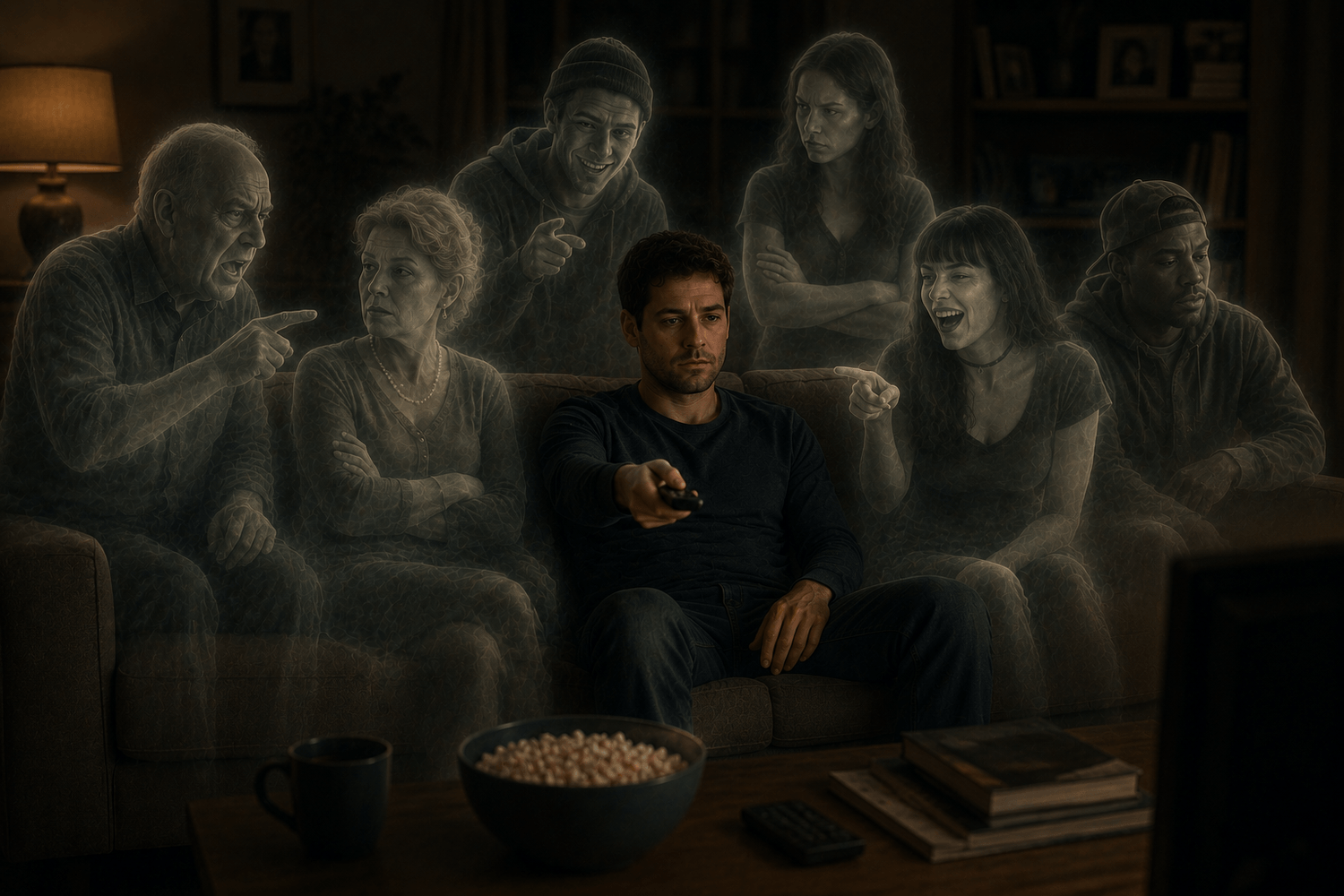
The real tragedy of unhealed history is that it forces us to project our past onto the innocent people in our present. When your partner forgets to reply to a text message for a few hours, you aren't actually reacting to today's silence. You're reacting to every single time you felt forgotten, pushed aside, or dismissed by the people who were supposed to cherish you.
When someone tries to get close to you and see the real you, you aren't responding to the gentle person standing in front of you. You're responding to the last person who used your vulnerability as a weapon to break your heart.
Suddenly, a minor misunderstanding isn't just a mistake; it's interpreted as the first sign of an impending abandonment. We scan our partner's face for shifts in energy, decode their text messages like codebreakers, and misinterpret their completely normal human limitations as proof that they're getting ready to leave us. We end up reacting to an old movie that's playing entirely inside our own head.
This happens because the human nervous system simply can't tell the difference between a raw memory and current reality. The amygdala, which acts as your body's emotional alarm center, doesn't possess a clock. When an attachment wound is triggered, the brain pulls up the historical data and floods your body with the exact same adrenaline, cortisol, and panic that you felt years ago.
This is why attachment wounds carry such an overwhelming, suffocating weight. They completely convince your body that yesterday's nightmare is happening right now in real time. Your heart rate spikes, your throat tightens, and your mind drops into a state of structural emergency.
Even if your logical brain tries to step in and tell you that your current partner is safe, dependable, and loving, the primitive survival brain completely overrides the logic. It chooses to believe the panic in the body over the reality in the room, fully convinced that it must deploy the old defenses to keep you alive.
We have to face a very heavy truth if we want to break this cycle, which is that the people we love often end up paying the ultimate price for crimes they never committed. Your current partner didn't abandon you in childhood, they didn't cheat on you in your twenties, and they aren't the ones who taught you to hide your true feelings to survive. Yet, they're the ones who have to navigate your cold walls, your sudden withdrawals, or your frantic demands for constant reassurance.
It's incredibly exhausting to love someone when you're constantly being forced to audition for a role you didn't cast. When we treat our partner like the person who hurt us, we deny them the chance to be seen for who they actually are.
We force them to carry the emotional debt of our history, handing them a bill for a deficit they didn't create. True clarity only arrives when we learn to look at our partner and consciously remind ourselves that they are not the ghost we are running from.

If you let your old protection strategies run the steering wheel of your relationship, you will eventually create the exact catastrophe you're trying to prevent. This is the ultimate trap of unhealed trauma; it becomes a self-fulfilling prophecy. When you use preemptive distancing, constant testing, or hostile protest behaviour to protect yourself from being hurt, you end up breaking the connection entirely by your own hand.
The avoidant system will pull back and ice a partner out to prove they don't need anyone, eventually driving the partner away and confirming the belief that people always leave. The anxious system will chase, suffocate, and demand reassurance until the partner retreats from the pressure, confirming the fear that closeness is unstable.
By allowing the ghosts of your past to dictate your current communication, you aren't protecting your future. You're just using your present relationship to rebuild the exact same prison you survived years ago.
Healing from this pattern isn't about erasing your history, pretending you don't have scars, or magically wiping your memory clean. Your past happened, and the pain you carried out of it was real. Making peace with it simply means shifting your relationship to the timeline. It's about learning how to acknowledge your history without allowing it to overwrite your present day.
This requires you to become a compassionate witness to your own activation. When the panic rises, instead of launching into your old survival strategies, you pause. You take a breath, look at the tight knot in your chest, and say, "This is an old echo. This is my past trying to protect me, but I am safe in this room right now." It means choosing to update your system's software one tiny, vulnerable moment at a time, allowing yourself to collect new, safe evidence from the person sitting right in front of you.
Don't let the ghosts of your past steal your future. The people who broke your trust or failed to meet your needs years ago have already taken enough of your precious life; they don't deserve to have a say in the love you're building today. True empowerment isn't about pretending you don't have wounds, it's about refusing to let those wounds hold the pen while you write your next chapter.
When you finally choose to step away from the old battlefields, you aren't forgetting what happened to you; you're simply reclaiming your energy and deciding that your current connection deserves a clean slate. When you quieten the historical alarms and look at the person in front of you through the lens of objective truth, you open the door to a completely different story, one built on safety, real intimacy, and the profound peace of finally being seen.
Written by: Jodi ♡ The Attachment Code